Peptide Calculator: Reconstitution & Dosage Tool
A precision Peptide Calculator is the gold standard for researchers and clinicians working with lyophilized bioactive peptides. Because peptides are synthesized and distributed as dry, freeze-dried powders, calculating the exact volume of bacteriostatic water to add—and determining the corresponding syringe units for a targeted dose—is essential for reproducible results and patient safety.
Whether reconstituting regenerative research peptides like BPC-157 and TB-500, or metabolic incretin mimetics like Semaglutide, Tirzepatide, and Retatrutide, our evidence-based calculator eliminates unit conversion confusion between milligrams (mg), micrograms (mcg), and insulin syringe units.
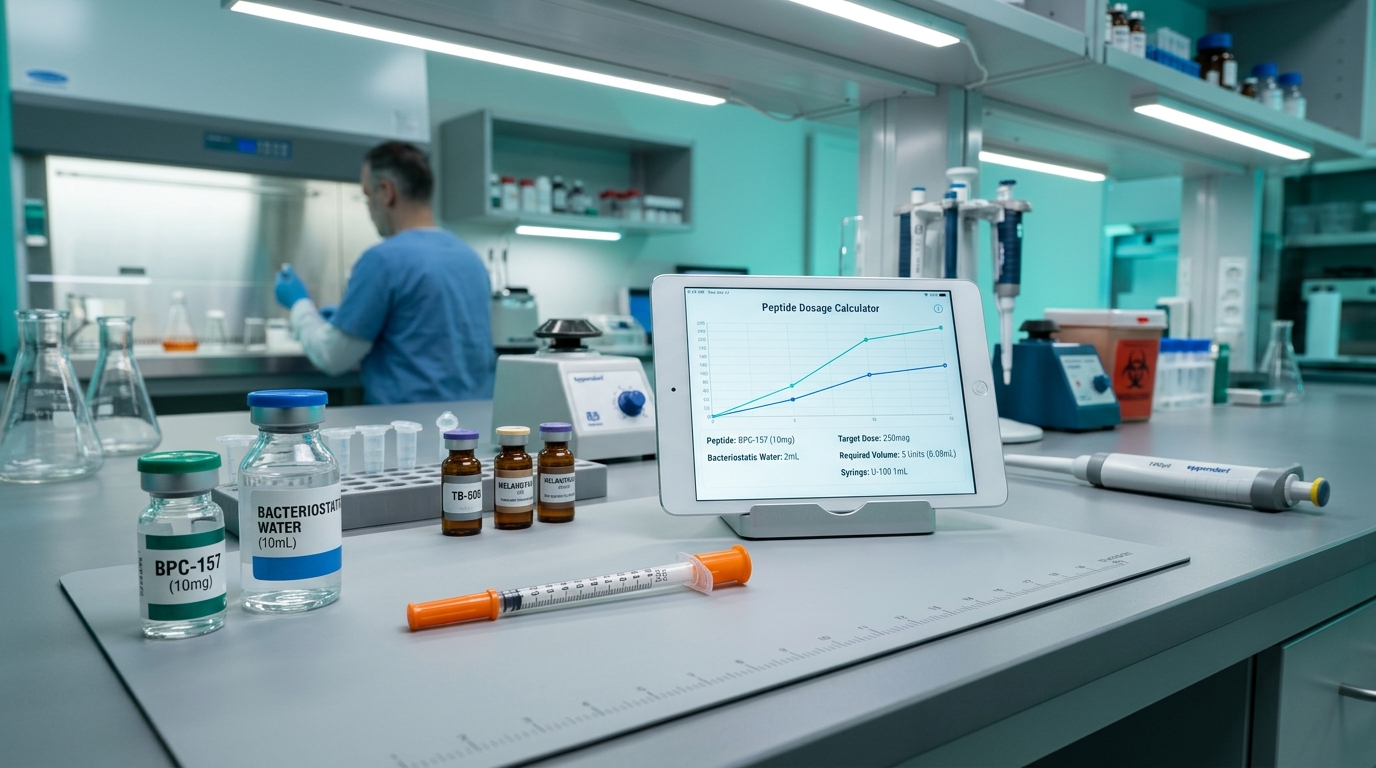
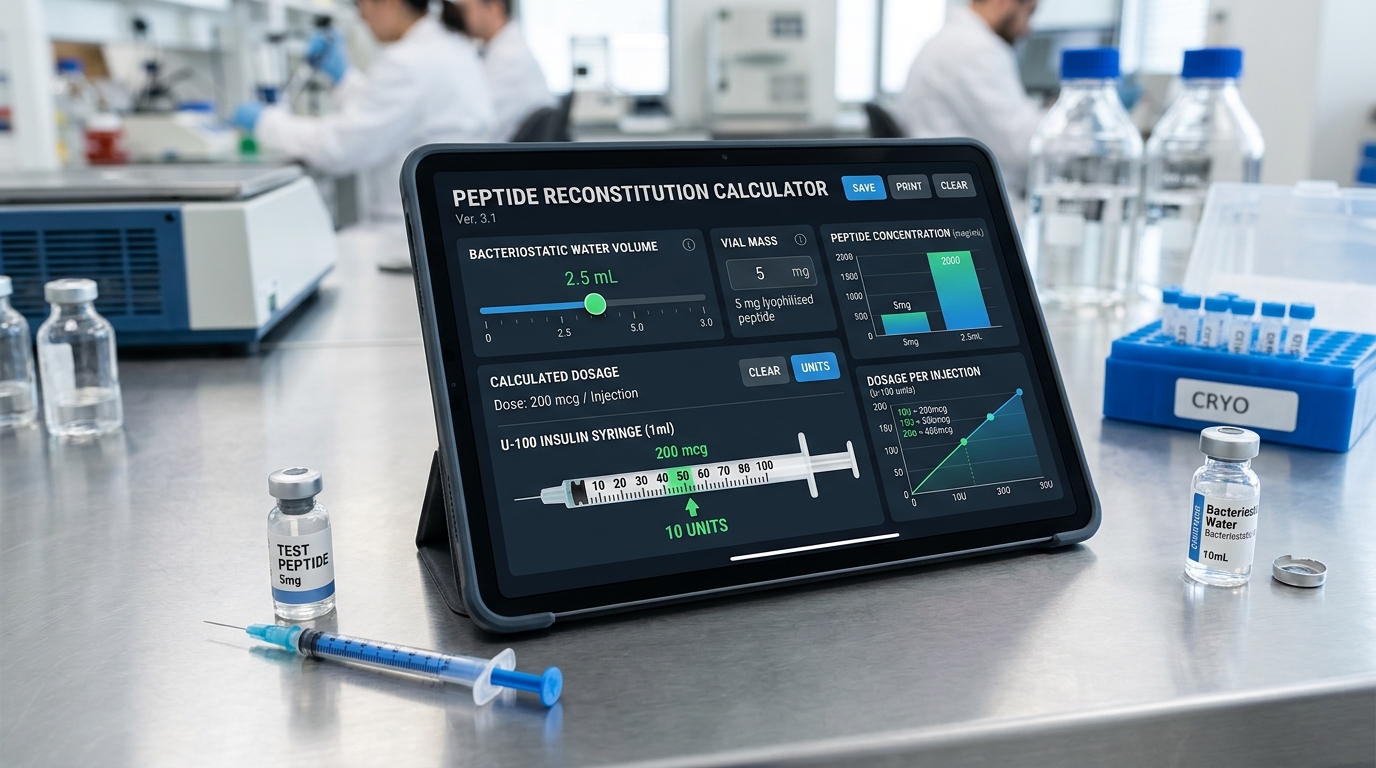
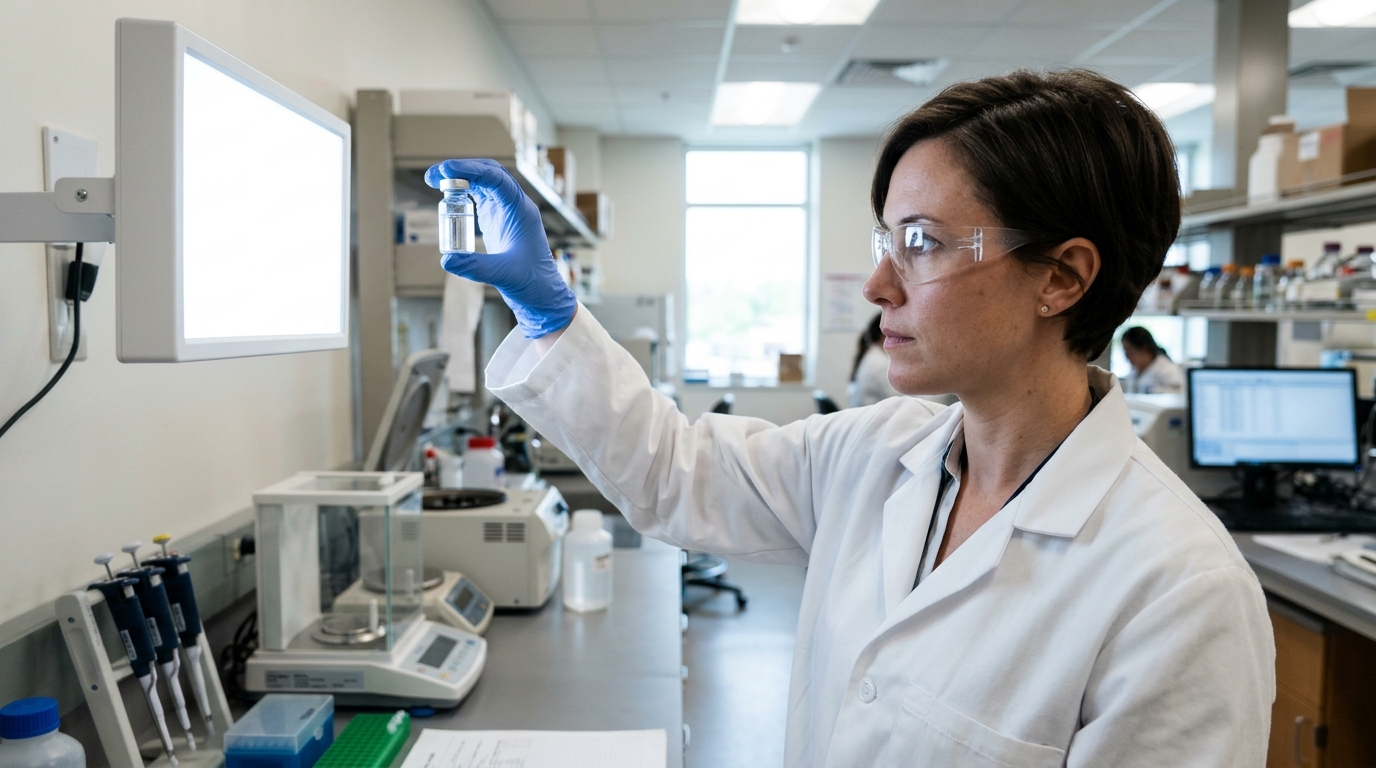
Laboratory Reconstitution Bench & Digital Calculator Station
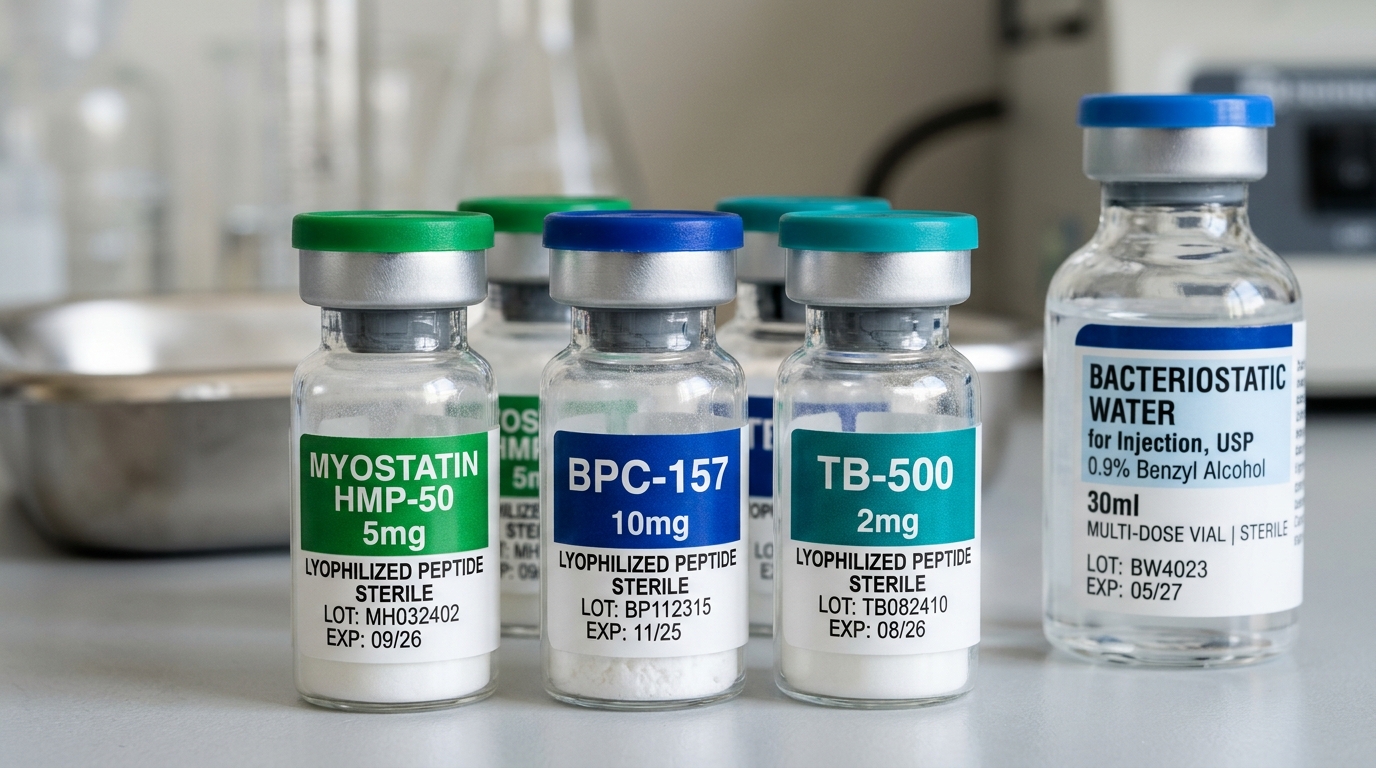
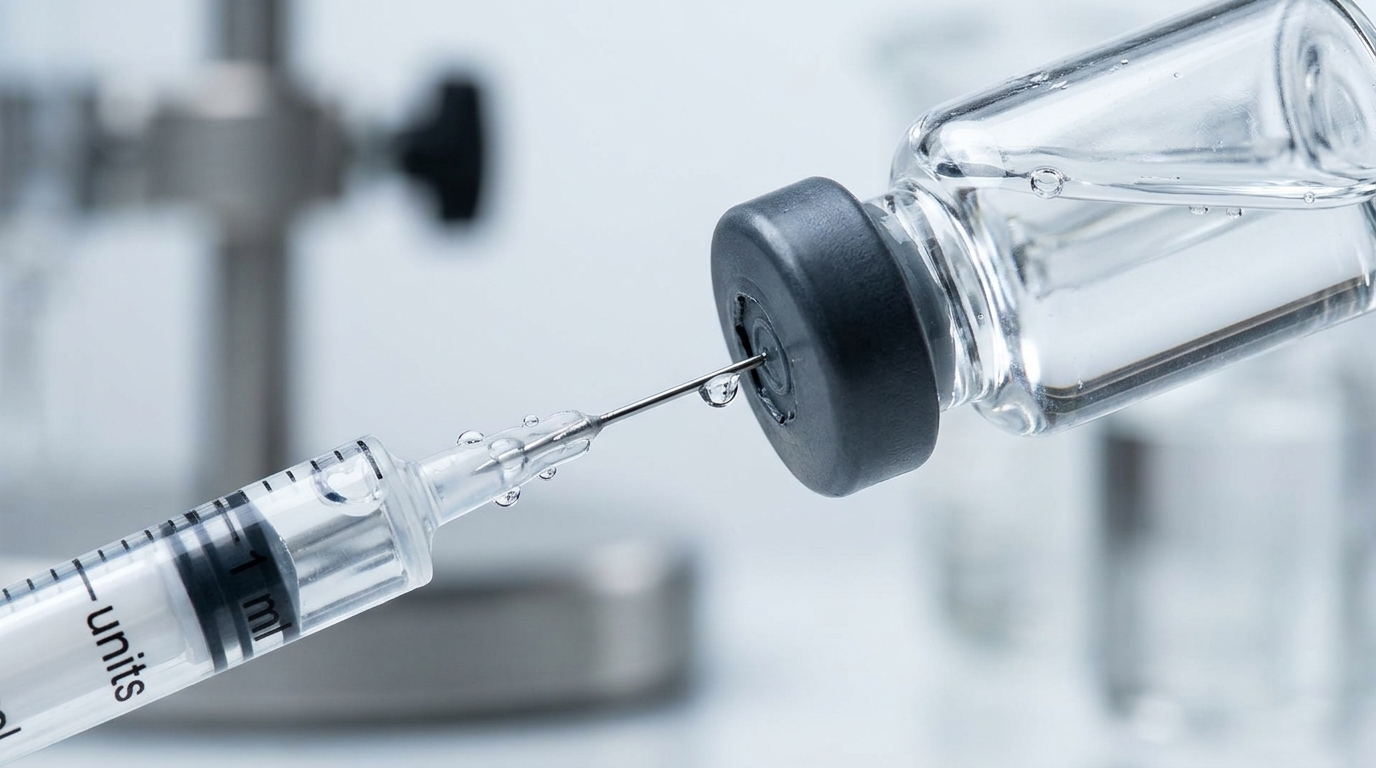
Lyophilized Peptide Vials & Bacteriostatic Water (0.9% Benzyl Alcohol)
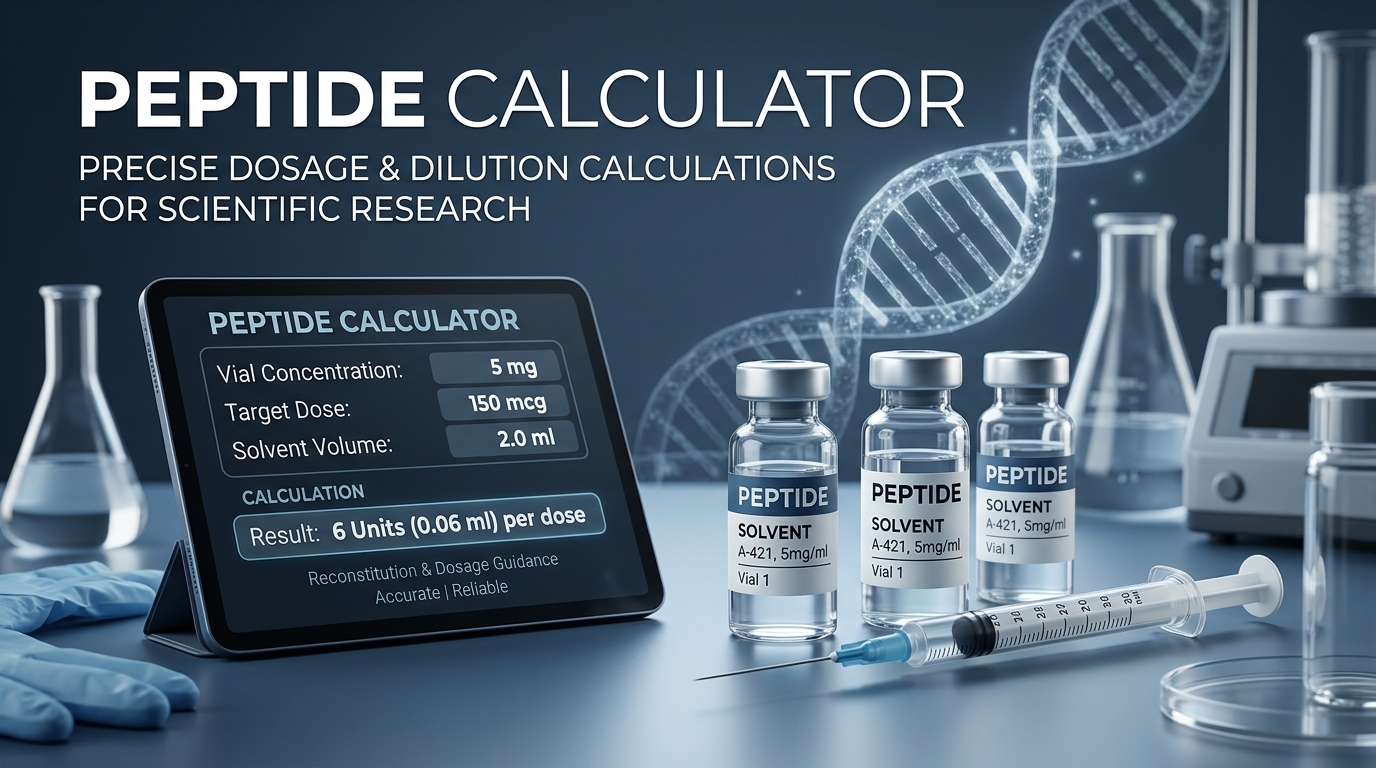
Peptide Reconstitution & Dosage Calculator
Select your peptide parameters below to compute instantaneous concentration, required injection draw volume, and exact syringe tick mark units.
Peptide Reconstitution & Dosage Reference Chart
Benchmark reconstitution ratios, solvent volumes, and U-100 syringe draw units across standard research peptide categories.
| Peptide Name | Vial Quantity | BAC Water | Concentration | Typical Dose | Syringe Draw (U-100) | Doses / Vial |
|---|---|---|---|---|---|---|
| BPC-157 | 5 mg | 2.0 mL | 2.5 mg/mL (25 μg/U) | 250 mcg | 10 Units (0.10 mL) | 20 Doses |
| BPC-157 (High Dilution) | 10 mg | 2.0 mL | 5.0 mg/mL (50 μg/U) | 500 mcg | 10 Units (0.10 mL) | 20 Doses |
| Semaglutide | 5 mg | 2.0 mL | 2.5 mg/mL (25 μg/U) | 0.25 mg (250 μg) | 10 Units (0.10 mL) | 20 Doses |
| Tirzepatide | 10 mg | 2.0 mL | 5.0 mg/mL (50 μg/U) | 2.5 mg (2500 μg) | 50 Units (0.50 mL) | 4 Doses |
| Tirzepatide (Concentrated) | 15 mg | 3.0 mL | 5.0 mg/mL (50 μg/U) | 5.0 mg (5000 μg) | 100 Units (1.0 mL) | 3 Doses |
| Retatrutide | 10 mg | 2.5 mL | 4.0 mg/mL (40 μg/U) | 2.0 mg (2000 μg) | 50 Units (0.50 mL) | 5 Doses |
| TB-500 (Thymosin Beta-4) | 5 mg | 2.0 mL | 2.5 mg/mL (25 μg/U) | 2.5 mg | 100 Units (1.0 mL) | 2 Doses |
| CJC-1295 / Ipamorelin Blend | 10 mg (5/5) | 2.0 mL | 5.0 mg/mL (50 μg/U) | 200 mcg (100/100) | 4 Units (0.04 mL) | 50 Doses |
| GHK-Cu (Copper Peptide) | 50 mg | 3.0 mL | 16.67 mg/mL | 2.0 mg | 12 Units (0.12 mL) | 25 Doses |
Standard Operating Protocol for Peptide Reconstitution
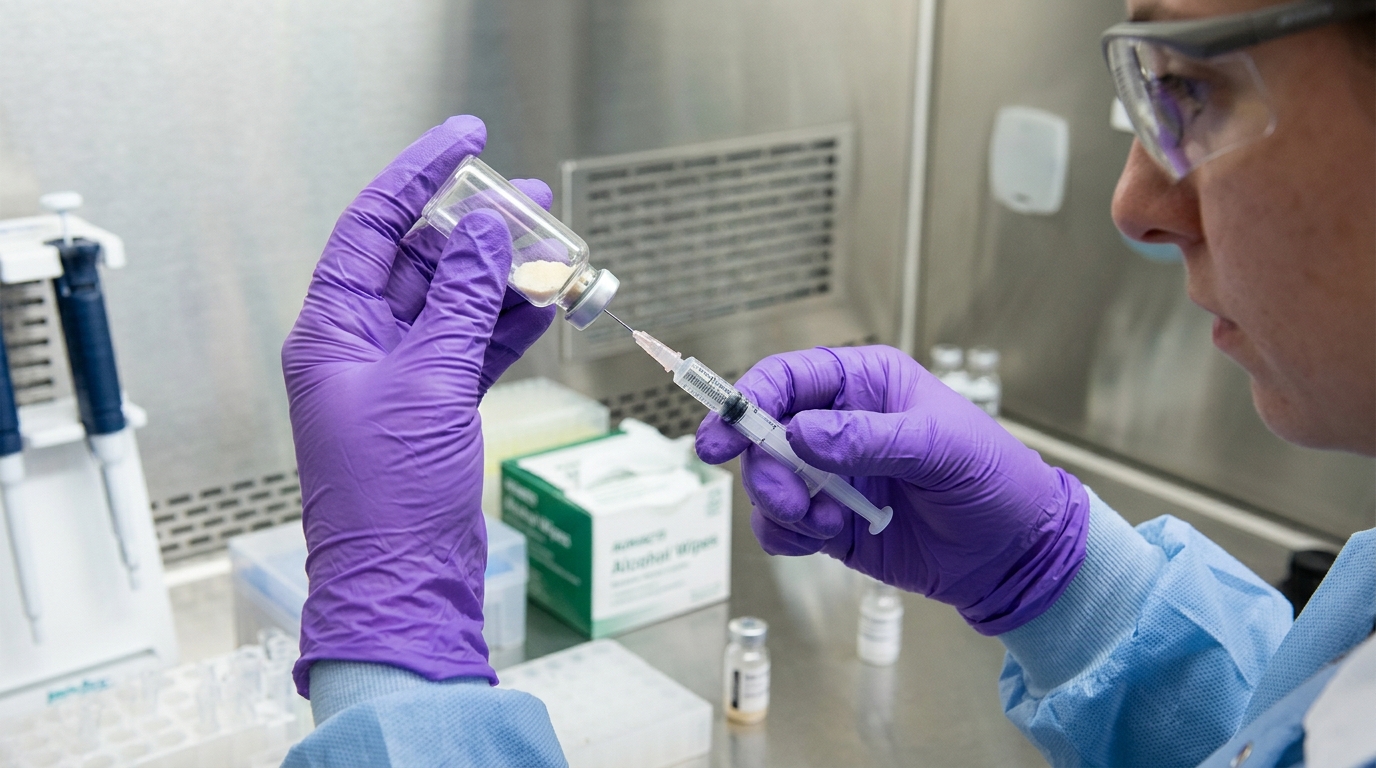
Bioactive research peptides are fragile polypeptide chains synthesized via solid-phase peptide synthesis (SPPS) and lyophilized into a crystalline or amorphous matrix. Preserving the tertiary chemical folding requires strict adherence to aseptic reconstitution standards:
Solvent Selection: Bacteriostatic Water (USP)
Always utilize Bacteriostatic Water containing 0.9% (w/v) benzyl alcohol. Plain sterile water supports bacterial proliferation once rubber septa are breached.
Slow Wall-Drip Injection (Prevent Shear Stress)
Direct the needle bevel toward the internal glass sidewall. Allow solvent to trickle down smoothly onto the powder cake rather than spraying directly, which can shear peptide bonds.
Gentle Swirl Dissolution (Never Shake)
Roll the vial gently between palms or swirl horizontally. Vigorous shaking introduces micro-air bubbles and causes mechanical protein denaturation.
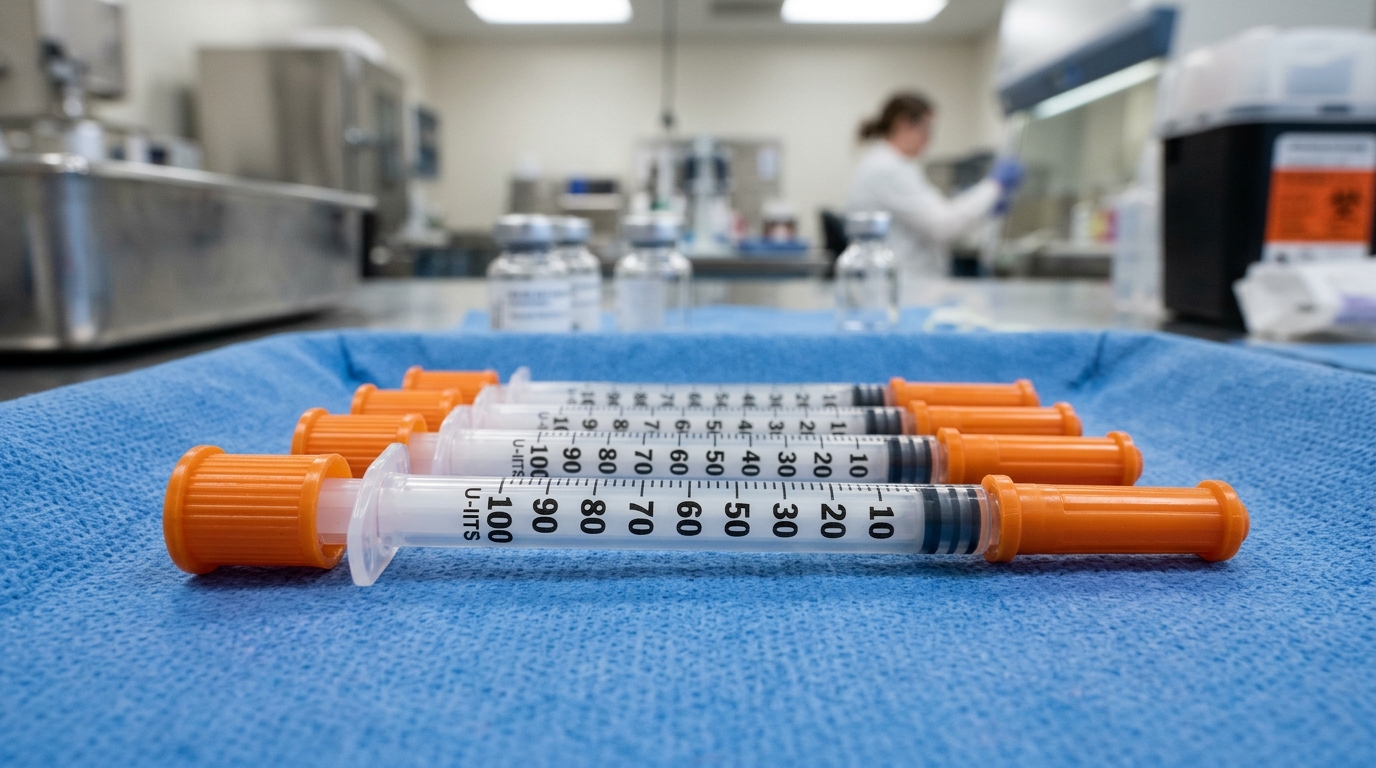
Understanding Insulin Syringe Markings & Units
A widespread error in peptide calculation is confusing insulin syringe units with milligrams or micrograms. Syringe units measure volume, not mass.
U-100 Syringes (1.0 mL Capacity)
1 Unit = 0.01 mLContains 100 graduation tick marks totaling exactly 1.0 milliliter. Most common format. Markings are spaced by 1 unit or 2 units depending on manufacturer. Ideal for standard volumes between 10 and 100 units.
U-50 Syringes (0.5 mL Capacity)
1 Unit = 0.01 mLContains 50 units totaling 0.5 mL. The tick marks are twice as far apart as a U-100 syringe barrel, significantly increasing visual accuracy for micro-doses between 5 and 30 units.
U-30 Syringes (0.3 mL Capacity)
1 Unit = 0.01 mLContains 30 units totaling 0.3 mL. Many U-30 barrels incorporate distinct half-unit marks, enabling single-microgram resolution for delicate peptide titrations.
Peptide Reconstitution Formulas & Calculations
Every calculation performed by our tool follows three fundamental biochemical equations. You can manually verify any result using this step-by-step logic.
Concentration Equation
Determines the mass of active peptide dissolved in each milliliter of reconstituted liquid.
Micrograms per Syringe Unit
Because 100 units equal 1.0 mL on a standard U-100 syringe, dividing concentration by 100 yields mass per tick mark.
Required Draw Units
Tells you exactly which graduation mark to withdraw liquid to on your insulin syringe plunger.
Worked Scientific Calculation Example: BPC-157 5mg
5 mg × 1,000 = 5,000 mcg
A 5mg vial contains five thousand micrograms of dry lyophilized peptide.
5,000 mcg / 2.0 mL = 2,500 mcg/mL
Each milliliter now contains 2,500 micrograms of active peptide solution.
2,500 mcg / 100 units = 25 mcg per Unit
Every single graduation mark on a U-100 syringe equals precisely 25 mcg.
250 mcg / 25 mcg per unit = 10 Units (0.10 mL)
Draw to the 10-unit tick mark for exactly 250 micrograms. The vial provides 20 full doses.
Peptide Storage, Temperature Control & Degradation Curves
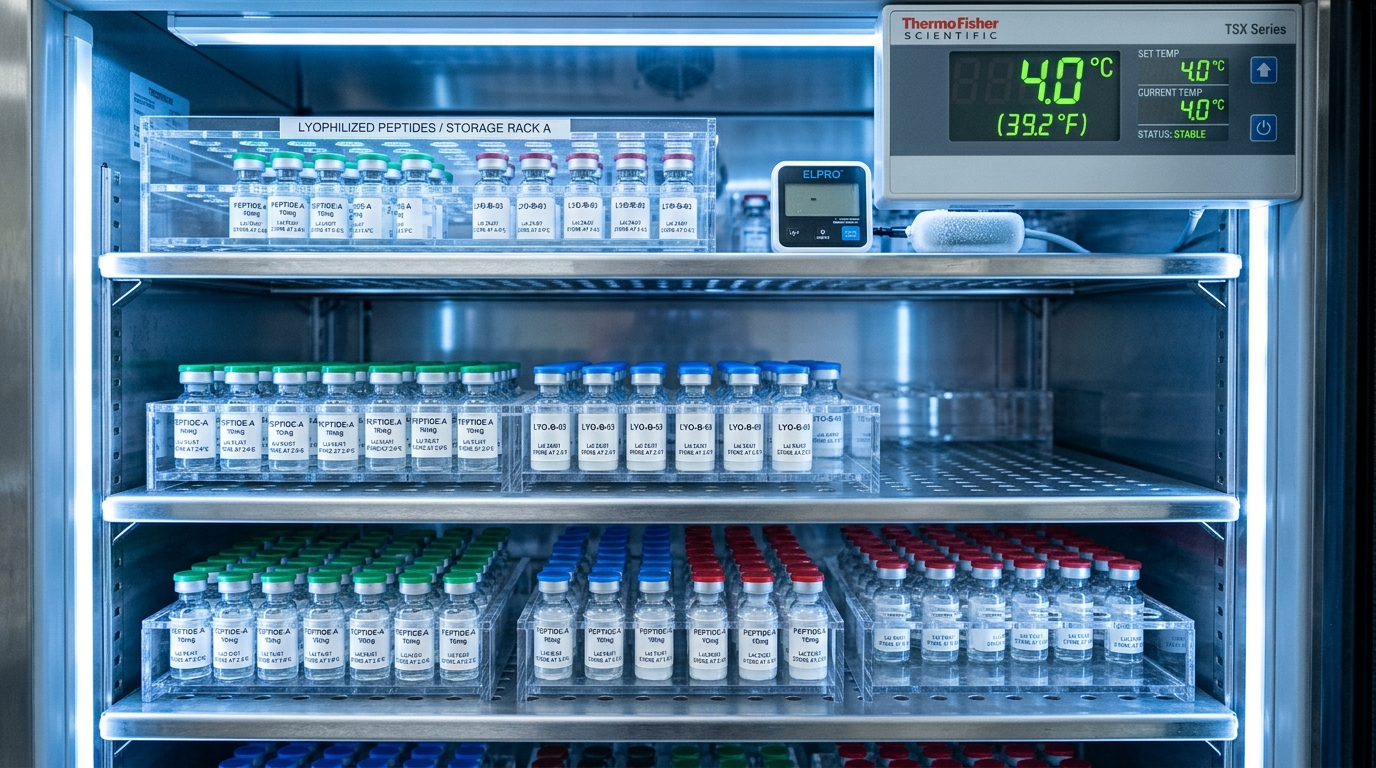
Peptides are inherently thermosensitive macromolecules. Hydrolysis, deamidation, and oxidation degrade reconstituted peptide solutions if cold-chain stability is violated.
Lyophilized (Dry Powder)
Stable at room temperature (20°C - 25°C) for up to 30–60 days during transport. Long term storage requires freezing at −20°C (−4°F) for 24–36 months.
Reconstituted (Liquid Solution)
Must be stored refrigerated at 2°C to 8°C (36°F to 46°F) at all times. Protect from light. Typically maintains >95% potency for 28–30 days in bacteriostatic water.
Never Freeze Liquid Peptides
Do not freeze liquid solutions in standard auto-defrost freezers. Temperature fluctuations and ice crystal expansion shear and destroy delicate peptide bonds.
Why Accurate Dilution Matters for Polypeptide Biology
Bioactive peptides exert their cellular actions through high-affinity binding to target transmembrane receptors (such as GLP-1R, GIPR, GHSR, or integrin receptors). Concentration inaccuracies create wide swings in receptor occupancy and pharmacokinetic half-life:
Prevention of Over-Concentration: Adding insufficient solvent can lead to solute saturation, micro-precipitation, and uneven particulate distribution.
Elimination of Low-Dose Error: Highly concentrated solutions require extremely small draw volumes (e.g. 2 units), where needle dead-space error can cause ±30% dosage variance.
Optimal Injection Comfort: Diluting to a manageable volume (10 to 50 units) ensures steady plunger control and tissue absorption.
Frequently Asked Questions (FAQ)
Common laboratory and biochemical inquiries regarding peptide reconstitution and dosage calculation.
What is a Peptide Calculator and why is it essential?
A Peptide Calculator translates solid peptide mass (mg) and liquid solvent volume (mL) into exact syringe measurement units (units on a U-100, U-50, or U-30 insulin syringe). Because peptides are packaged in dry lyophilized form, accurate math prevents underdosing or severe overdosing.
How much bacteriostatic water should I add to a 5mg or 10mg vial?
Typically, 1.0 mL to 2.5 mL is recommended. Adding 2.0 mL to a 5mg vial yields a concentration of 2.5 mg/mL (25 mcg per unit), allowing a standard 250 mcg dose to equal 10 units. For a 10mg vial, 2.0 mL yields 5.0 mg/mL (50 mcg per unit), or 3.0 mL yields 3.33 mg/mL.
Can I use sterile water instead of bacteriostatic water?
No. Sterile water does not contain an antimicrobial preservative. Once pierced, bacteria can contaminate the liquid within 24 hours. Bacteriostatic water contains 0.9% benzyl alcohol, which inhibits microbial growth and preserves sterility for up to 28–30 days in the refrigerator.
Why should peptides never be vigorously shaken after reconstitution?
Peptides consist of delicate amino acid chains folded into secondary and tertiary structures. Mechanical agitation and high-shear shaking generate microbubbles that break hydrogen bonds, causing conformational denaturation and rendering the peptide biologically inert. Always roll or swirl the vial gently.
How do I convert milligrams (mg) to micrograms (mcg)?
Multiply milligrams by 1,000. For example, 1 mg = 1,000 mcg, 0.5 mg = 500 mcg, and 0.25 mg = 250 mcg. Conversely, to convert micrograms to milligrams, divide by 1,000 (e.g. 250 mcg / 1,000 = 0.25 mg).
What is the difference between U-100, U-50, and U-30 syringes?
All three share the exact same scale: 100 units equal 1.0 mL (1 unit = 0.01 mL). The difference is total capacity and tick mark spacing: U-100 holds 1.0 mL (100 units), U-50 holds 0.5 mL (50 units), and U-30 holds 0.3 mL (30 units). Smaller syringes offer wider spacing between lines, making micro-doses much easier to measure accurately.